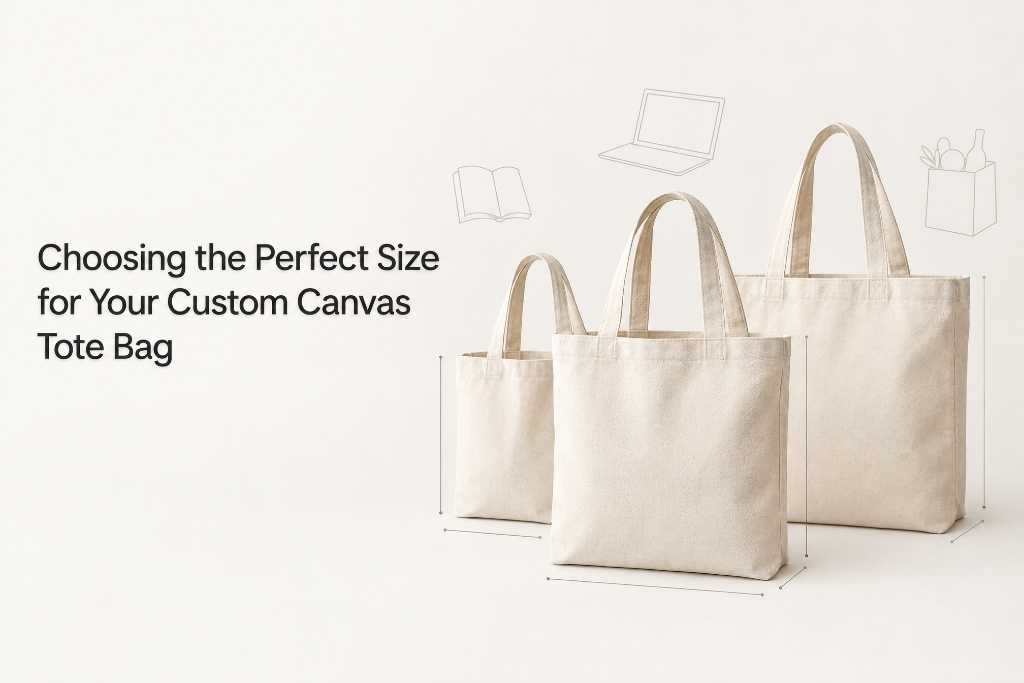
Size is one of the easiest specifications to skim past when planning a custom canvas tote bag — and one of the easiest to get wrong. A bag that's too small won't hold what it's actually meant to carry. One that's too large can feel bulky, awkward to carry, and add cost and material that never gets used. Getting the size right starts with understanding what the dimensions actually mean, then matching them to how the bag will really be used.
This guide walks through how to read tote bag measurements, which sizes tend to suit which use cases, and — just as importantly — why a bigger or more elaborate bag isn't automatically a more premium one. None of this requires specialized knowledge going in; it mostly comes down to thinking clearly about what the bag is actually for before settling on a spec sheet.
How to Read and Measure Canvas Tote Bag Dimensions
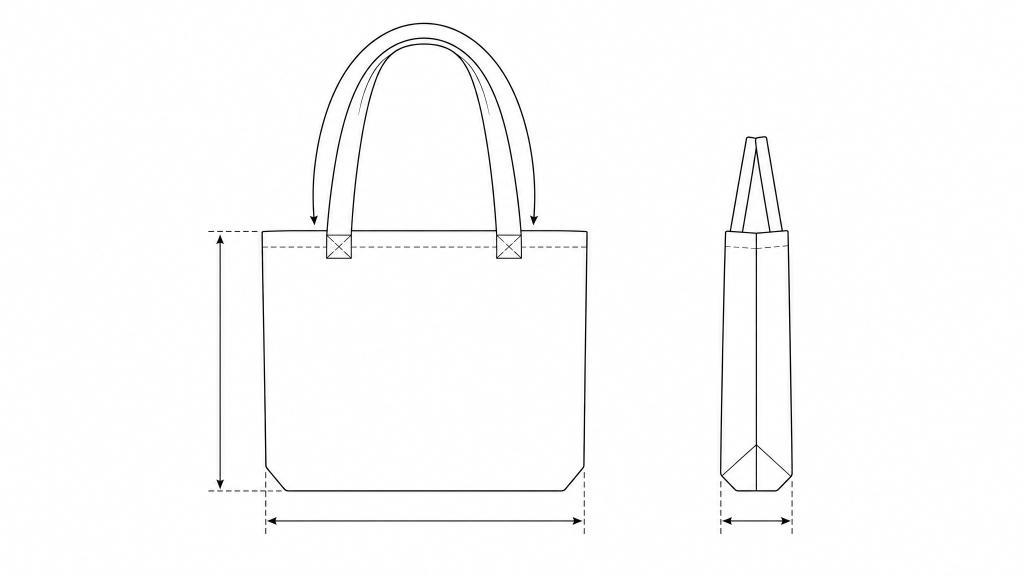
Tote bag dimensions are usually given as width, height, and depth, but it helps to know exactly what each measurement refers to before comparing bags or specs across suppliers. For an accurate comparison, measurements should always be taken with the bag lying flat and unstretched.
● Height — measured from the top edge of the bag down to the bottom seam
● Width — measured across the bag from one side seam to the other
● Depth (gusset) — if the bag has a gusset, the extra fabric panel at the sides or bottom, this is measured by laying the bag flat and measuring the width of that base or side panel
● Handle length — measured from where the handle is stitched to the top edge of the bag, down to the other side
Depth is the measurement buyers most often overlook, and it tends to matter the most for real-world capacity. Two bags with identical width and height can hold noticeably different amounts depending on how much gusset depth they have — a flat bag with little to no gusset will carry thinner, flatter items well, while a deeper gusset is what actually gives a bag the volume to hold bulkier items like groceries or a change of clothes.
It is worth requesting measurements directly from a supplier rather than relying solely on a product photo or a generic size label like "medium," since labeling conventions are not standardized across manufacturers. Two bags labeled identically can differ by an inch or more in any given dimension, which is enough to matter for anything with a tight fit requirement, such as a laptop sleeve or a specific set of branded inserts.
Common Canvas Tote Bag Sizes at a Glance
Canvas tote bags are generally grouped into a handful of common size categories. Exact dimensions vary somewhat by manufacturer, but the following ranges represent what most buyers will encounter when comparing standard sizing:
Category | Typical Dimensions (in) | Typical Dimensions (cm) | Common Use |
Small | 10" W x 12" H x 3" D | 25 x 30 x 8 cm | Small items — books, snacks, light everyday carry |
Medium | 15" W x 16" H x 4" D | 38 x 40 x 10 cm | Daily use, shopping, a laptop or light groceries |
Large | 18" W x 18" H x 5" D | 45 x 45 x 13 cm | Multiple items — beach gear, gym clothes |
Extra-Large | 20" W x 22" H x 6" D | 50 x 55 x 15 cm | Heavy-duty use — grocery runs, laundry, travel |
These categories are a useful starting reference rather than a fixed standard — it is always worth confirming exact dimensions with a specific supplier rather than assuming every "medium" tote is built to the same spec.
Choosing the Right Size by Use Case
The most reliable way to choose a size is to start from how the bag will actually be used, rather than picking a size first and hoping it fits the purpose.
Promotional and Gifting Use
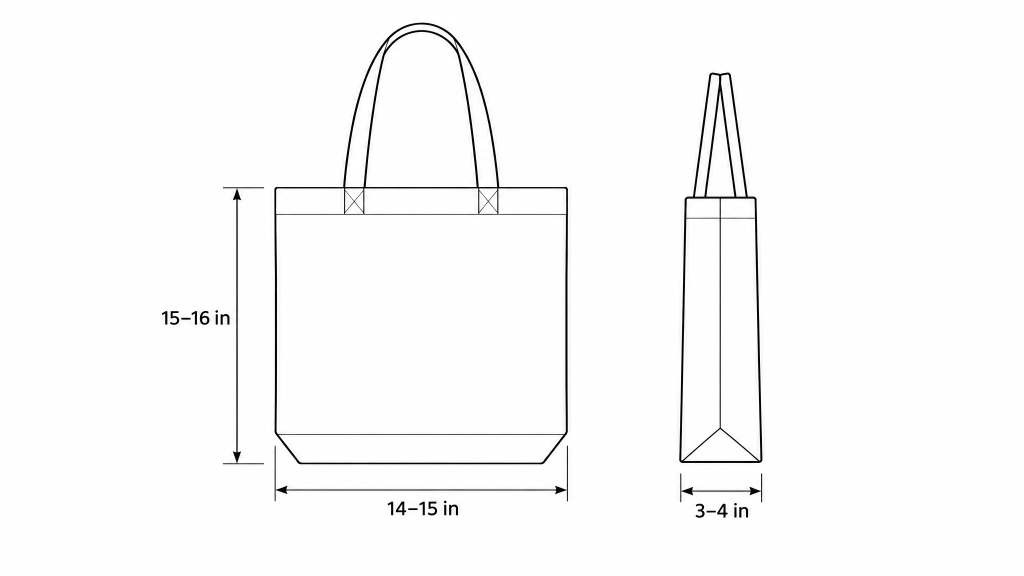
For branded giveaways — trade shows, corporate gifts, event merchandise — a size in roughly the 14 to 15 inch width and 15 to 16 inch height range, with around 3 to 4 inches of depth, tends to work well. It is practical for everyday use, has enough room for items like brochures or a water bottle, and is easy enough for a recipient to carry and reuse — which is ultimately what drives the brand visibility a promotional bag is meant to generate.
Students
Students generally gravitate toward medium-sized totes, often somewhere around 15" x 15" x 3", with enough room for books, notebooks, a laptop, and other everyday school items. This size tends to balance portability with enough capacity for a full day on campus.
Travelers
Travelers tend to prefer larger totes, often around 18" x 14" x 6", paired with sturdy handles. The extra volume accommodates clothing, toiletries, gadgets, and souvenirs, while the added depth helps the bag hold its shape when packed fuller than an everyday tote would be.
Workplace and Commuting Use
For daily commuting and office use, medium-to-large sizes — often in the 15" x 15" to 18" x 14" range, generally with a wider base — tend to work best. This range comfortably fits a laptop, documents, lunch, and other everyday essentials without feeling oversized for daily carry.
Shoppers
Shoppers typically lean toward larger totes, often around 18" x 15" x 6", to comfortably hold groceries, clothing, or other purchases in a single trip — reducing the need to juggle multiple bags.
These are starting points rather than fixed rules. The right size for a specific project ultimately depends on the intended user and how the bag will actually be carried and filled, day to day.
It also helps to think about how the bag will typically be carried, not just what it will hold. A bag that is wide enough to fit a laptop but too shallow to keep it from sliding around can feel just as impractical as one that is simply the wrong overall size. Similarly, a bag meant to be slung over a shoulder for a full day of walking benefits from handle length and bag depth that are comfortable together, not just a capacity number on a spec sheet. Thinking through the full carrying experience, not only the raw dimensions, tends to produce a better result than sizing a bag from a chart alone.
Is Bigger Always Better? Why Size Isn't the Same as Premium
It is a common assumption that a larger, more elaborate tote bag automatically reads as a higher-quality or more premium product. In practice, that is not really how perceived quality works.
A larger bag does mean more capacity and more surface area for branding, which can be genuinely useful depending on the goal. But size on its own does not create the impression of quality — it just creates more volume. An oversized bag made from thin, poorly constructed fabric does not feel premium; it just feels like a bigger version of a mediocre bag. Meanwhile, a smaller, well-proportioned tote made from a well-chosen fabric with clean, reinforced construction can feel considerably more premium than a larger bag that was not built with the same care.
What actually tends to signal quality has much less to do with overall size and much more to do with:
● Material choice — the weight, texture, and finish of the canvas itself
● Construction quality — how cleanly the seams are sewn and how well stress points like the handles are reinforced
● Structure — whether the bag holds its shape, how the base and gussets are built, and how the proportions feel in hand
If you are deciding what base fabric to use, our canvas tote bag material guide covers common weight and finish options. And since structure plays just as large a role in how premium a bag feels as size does, our canvas tote bag structures guide walks through the structural choices available and how they affect a bag's overall look and durability.
The same logic applies to complexity. Adding more pockets, more hardware, or a more elaborate structure does not automatically make a bag feel more upscale — added complexity that is not well executed can just as easily make a bag feel cluttered or over-engineered for its purpose. The goal worth designing toward is a size and structure that genuinely fits the intended use, built well, rather than simply the largest or most feature-dense option available.
There is also a practical cost dimension worth weighing here. A larger bag or a more complex structure generally uses more material and more production steps, which affects unit cost at any given order volume. Spending that budget on a size or feature set the end user will not actually benefit from is rarely a good trade — the same budget often goes further put toward a better fabric or cleaner construction at a size that genuinely matches the intended use.
Frequently Asked Questions
What is the most versatile all-purpose tote bag size?
A medium size, generally in the 15" x 15" to 16" x 15" range with a few inches of depth, tends to be the most broadly useful — large enough for daily essentials or light shopping, without feeling oversized for everyday carry.
Does a bigger tote bag cost significantly more to produce?
Generally, yes — a larger bag uses more fabric and material, which affects unit cost. Whether that added cost is worth it depends entirely on whether the extra capacity actually serves the intended use, rather than being added for its own sake.
Can one size realistically work for multiple use cases?
A medium-to-large size can often serve more than one purpose reasonably well, but a size chosen specifically for one use case — promotional gifting versus daily commuting, for example — will usually perform noticeably better for that specific purpose than a generic compromise size.
Should size be decided before or after choosing fabric and structure?
Ideally together, rather than one after the other. Fabric weight and structural choices affect how a given size actually looks and performs, so settling on all three around the same time tends to produce a more coherent final design than finalizing size in isolation.
Not Sure Which Size Fits Your Project? Share your intended use case and quantity, and we can help you think through the right size, fabric, and structure before you commit to a full production run. Contact Dykyuri to send an inquiry and start the conversation. |
 English


