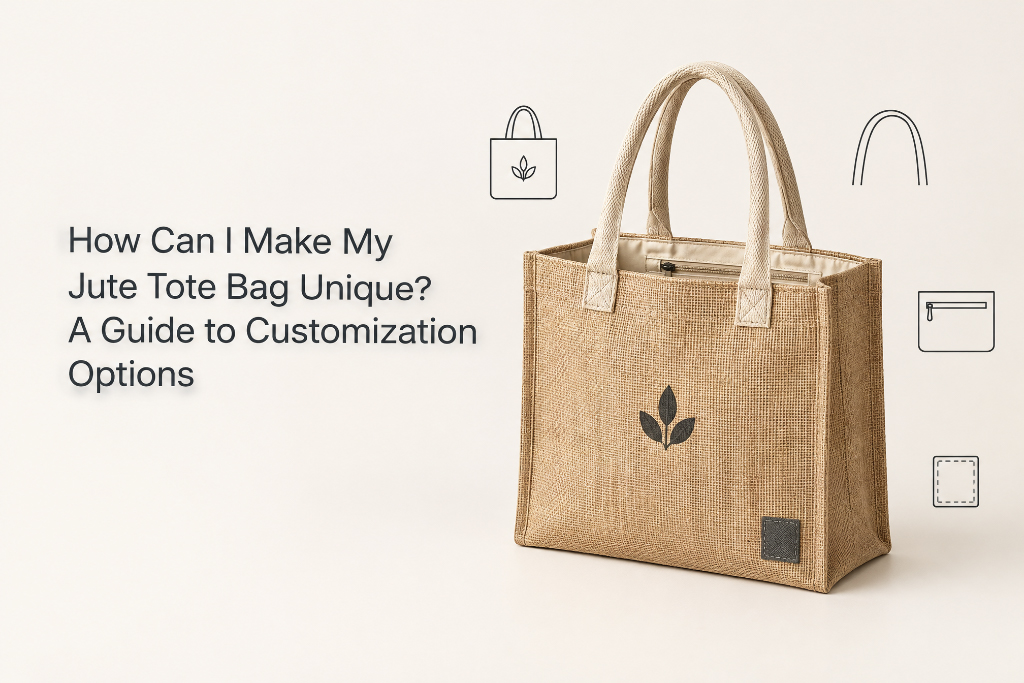
A plain jute tote bag is a solid starting point — but it's still just a starting point. Between decoration method, logo placement, patches, lining, handles, and interior pockets, there are far more ways to personalize a jute tote than most buyers realize going in.
This guide walks through the main customization categories available, how to think about placing a logo or design, and how to combine these choices into something that feels like one cohesive design rather than a random pile of add-ons. None of it requires specialized design knowledge — mostly it comes down to understanding what each option actually changes about the finished bag, then choosing deliberately instead of defaulting to whatever a template happens to offer.
Decoration Methods: How to Put Your Design on a Jute Tote Bag
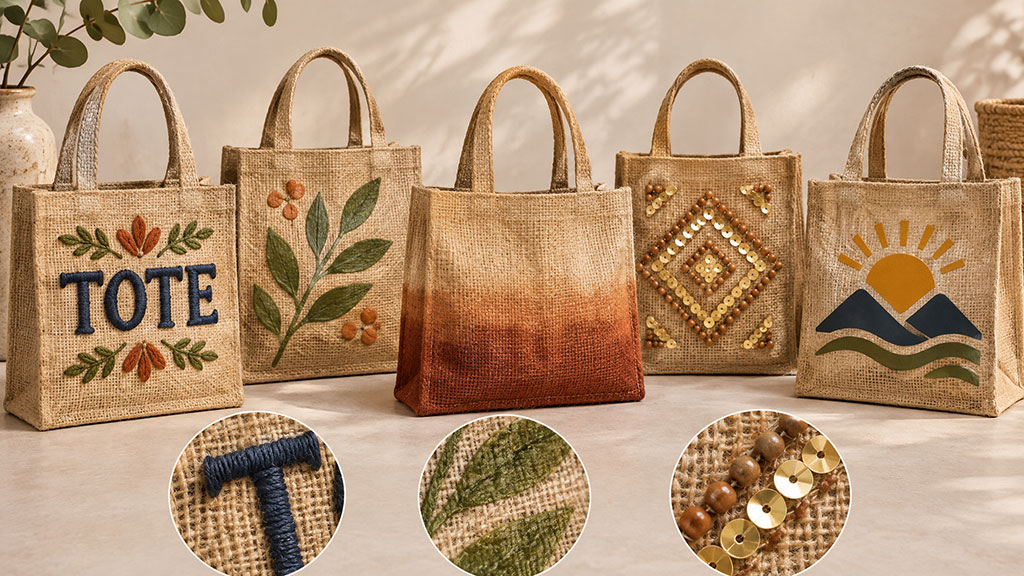
There are several distinct ways to apply a design, logo, or message to a jute tote bag, and each has its own look, feel, and ideal use case.
● Embroidery — stitched names, initials, or short quotes in a range of colors and fonts; tends to read as more premium and durable than printed alternatives, and holds up well to regular use
● Fabric paint and stencils — a flexible way to create custom patterns or illustrations directly on the fabric, well suited to one-off or small-batch designs
● Tie-dye or dip-dye techniques — a more expressive, colorful approach that works well when the goal is a bold, distinctive look rather than a clean, minimal one
● Beading or sequins — adds texture and a touch of visual interest, generally favored for a more decorative, fashion-forward result rather than a corporate or minimalist one
● Iron-on transfers or vinyl decals — a straightforward way to apply a more intricate or detailed design without the setup involved in embroidery or printing
None of these methods is universally "best" — the right choice depends on the look being aimed for, the budget, and how durable the design needs to be under regular use. Embroidery and vinyl/iron-on transfers tend to hold up best over time, while paint, tie-dye, and beading lean more toward a distinctive, decorative aesthetic.
It's also worth thinking about how a decoration method interacts with jute's natural texture specifically. Jute has a visible, somewhat coarse weave compared to a smoother fabric like cotton canvas, which means very fine, delicate linework can lose some sharpness regardless of which decoration method is used. Bolder shapes, clear lettering, and simpler compositions tend to translate more reliably onto jute than intricate, highly detailed artwork.
Where to Place Your Logo or Design
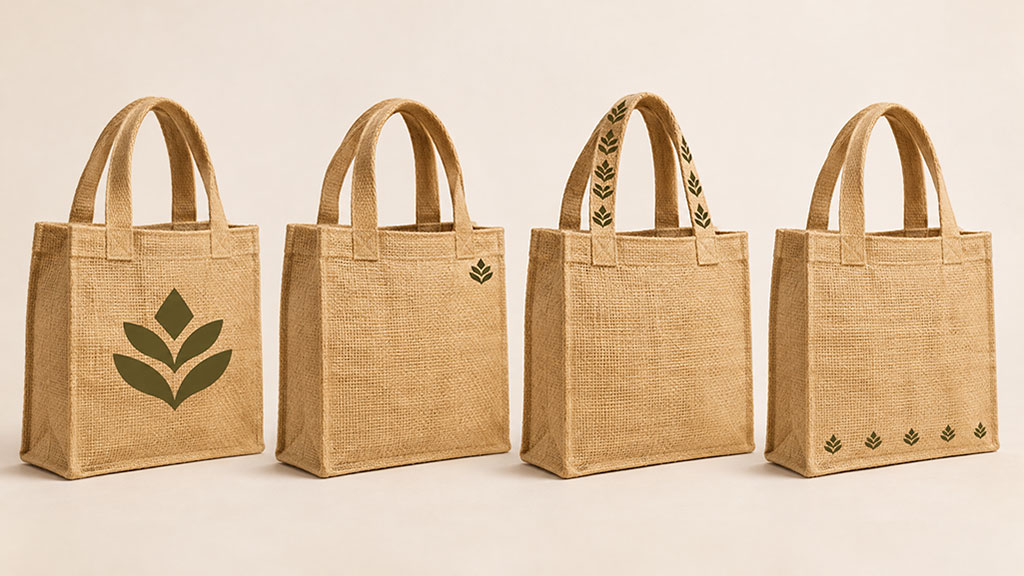
Placement affects how a design reads just as much as the design itself. A few common placement zones, and how they tend to perform:
Placement | Typical Size | Best Suited For | Relative Cost |
Front center panel | Large | Logos, names, or a meaningful quote meant to be the focal point | Higher |
Top edge or upper corner | Smaller | Initials or a small logo, for a subtle, understated look | More affordable |
Handles | Limited space | Small text like initials or a simple pattern, as a stylish detail | Generally lower |
Bottom edge | Medium | A design that surprises a little when the bag is carried | Moderate |
A front-center placement makes the most sense when the design itself is the point of the bag — a brand logo, a bold graphic, or a message meant to be seen clearly. A smaller placement at the top edge, corner, or handle tends to suit a more restrained, premium look, where the goal is a subtle personal touch rather than a statement piece.
It's worth factoring in how the bag is actually carried, too. A front-center design is seen clearly when the bag is set down or carried facing outward, but a design placed low on the bottom edge is mostly hidden during normal use and only reveals itself occasionally — which can work well for a playful, surprise-style detail, but is a poor choice for a logo that needs consistent visibility, such as a corporate gifting program.
Patches: A Flexible Way to Personalize
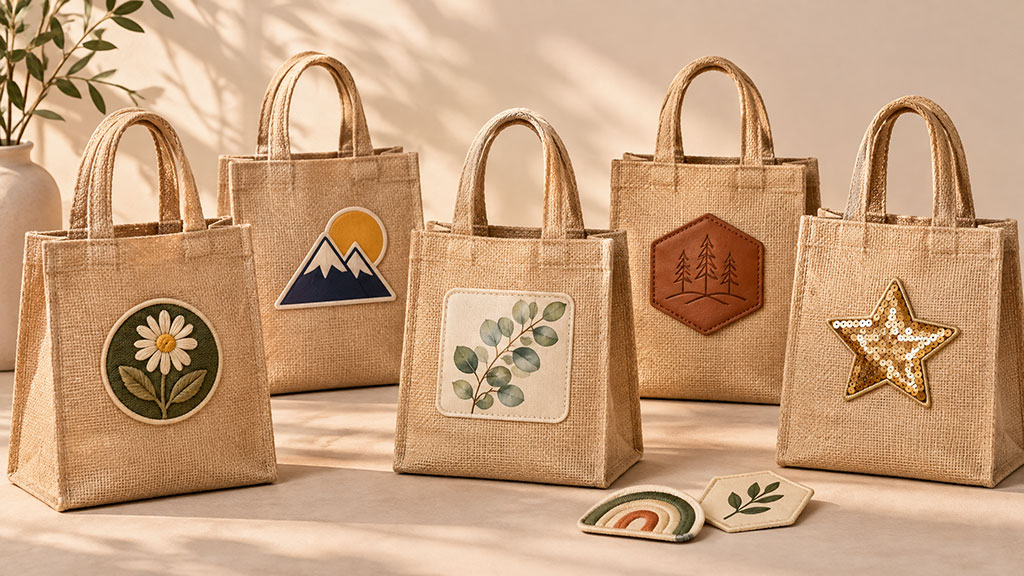
Patches are a popular middle ground between a fully custom design and a plain bag — they can be added, swapped, or layered without committing to a single permanent design.
● Embroidered patches — classic and versatile, commonly used for logos, names, or custom designs, and available in a wide range of shapes, sizes, and colors
● Iron-on patches — easy to apply, available in a wide variety of themes, and a convenient way to change a bag's look quickly without specialized equipment
● Printed fabric patches — a smooth, modern look well suited to detailed artwork or graphic elements that are difficult to achieve with embroidery
● Leather patches — add a more refined, premium feel, and are often used for branding or logos where a more polished aesthetic is the goal
● Sequin patches — a trendier, more playful option that adds sparkle, generally suited to a younger or more fashion-forward audience
Structural and Functional Upgrades: Linings, Handles, and Pockets
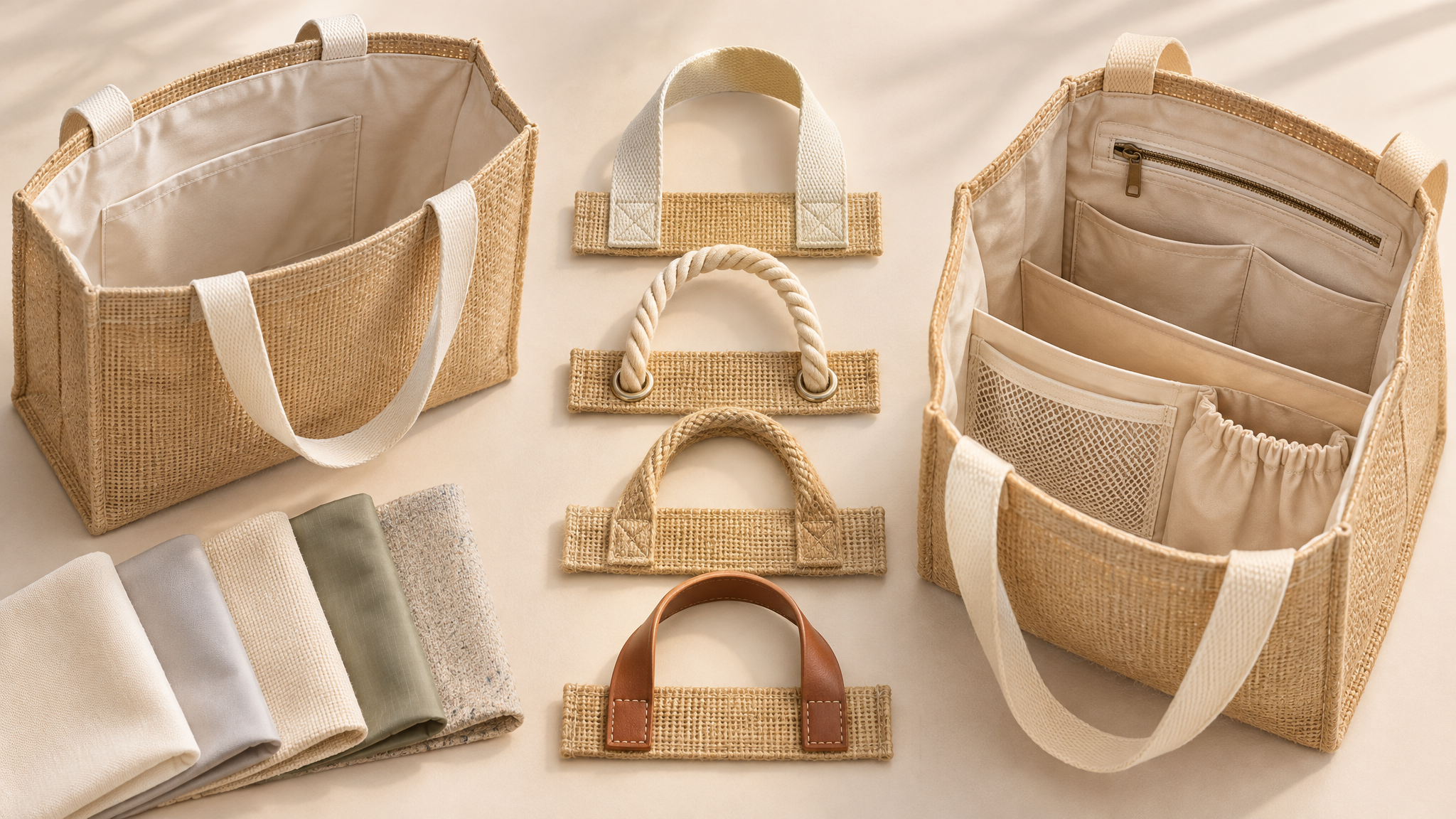
Decoration is only part of making a jute tote feel genuinely personalized — the structural and functional choices underneath the design matter just as much to how the finished bag actually performs.
Lining Options
● Cotton lining — breathable and natural, complementing jute's eco-friendly character; can be dyed for additional color customization
● Polyester lining — durable, lightweight, and moisture-resistant, a practical choice for groceries or anything likely to spill or get wet
● Canvas lining — adds meaningful structural reinforcement, well suited to heavier loads, and can itself be printed with a custom design
● Nylon lining — water-resistant and easy to clean, a practical option for beach use or wetter conditions
● Recycled fabric lining — reinforces the bag's overall sustainability profile, and since it draws on varied reclaimed material sources, each lining tends to be a little different
Handle Options
● Cotton webbed handles — generally the most comfortable and durable option, with a natural look that pairs well with jute
● Rope handles — a sturdy, casual, slightly nautical look, with a thicker, comfortable grip well suited to beach bags or everyday carry
● Jute handles — matching the body fabric for a cohesive, rustic look, though generally less cushioned for extended carrying than cotton or rope
● Leather handles — a more polished, premium option, durable enough to support heavier loads and well suited to fashion-forward or corporate bags
Inner Pocket Options
● Zippered pocket — secure storage for valuables like a wallet, keys, or phone, well suited to everyday use
● Open slip pocket — simple and easy to access, good for smaller items like a pen or lip balm
● Divider pocket — adds structure and keeps items separated, useful for work or school settings with notebooks or a tablet
● Mesh pocket — breathable and visible, practical for a water bottle or snacks
● Elasticized pocket — holds items like a water bottle securely upright while staying easy to access
If you want to see how these structural and decoration choices come together on a finished bag, our custom jute tote bag page covers the available customization options in more detail.
Building a Cohesive Design, Not Just a Collection of Add-Ons
With this many options on the table, it's tempting to want all of them at once — embroidery and patches and a statement lining and a bold handle choice. In practice, a jute tote bag tends to look more intentional, not more impressive, when a smaller number of choices are made to work together rather than every available option being layered on at once.
A useful way to think about it: pick one primary decoration method and placement as the visual anchor, then choose structural elements — lining, handles, pockets — that support the intended use case without fighting the main design for attention. A leather handle and a sequin patch, for instance, are each appealing on their own but tend to pull a design in two different directions at once.
The goal worth designing toward is a bag where every choice — the decoration, the placement, the lining, the handles, the pockets — reads as part of one consistent idea, rather than a checklist of features applied independently of each other.
This is also where it helps to think backward from the intended use case rather than forward from the list of available options. A bag meant for daily grocery runs benefits more from a durable lining and comfortable handles than from an elaborate decorative patch. A bag meant as a polished corporate gift benefits more from a restrained, well-placed logo and a premium handle than from tie-dye or sequins. Starting from how the bag will actually be used tends to narrow the long list of customization options down to a handful of choices that genuinely make sense together.
Frequently Asked Questions
Which decoration method lasts the longest with regular use?
Embroidery and vinyl or iron-on transfers generally hold up best over repeated use and washing, compared to paint-based or embellishment-heavy methods like beading, which can be more delicate over time.
Can multiple decoration methods be combined on one bag?
They can, but it's worth doing deliberately rather than by default — combining too many methods (say, embroidery, a patch, and tie-dye all on one bag) tends to compete for attention rather than complementing each other. One primary method paired with a smaller supporting detail usually reads better than several competing techniques.
Does lining choice affect how a jute tote bag feels on the outside?
Indirectly, yes. A structured lining like canvas can make the bag hold its shape more noticeably from the outside, while a lighter lining like cotton keeps more of the bag's natural, relaxed drape. It's worth factoring into the decision alongside the decoration and handle choices, not just evaluating it on its own.
Is it better to choose decoration or structure first?
Generally, it helps to settle on the primary use case first — everyday carry, gifting, branded merchandise — since that tends to point toward an appropriate lining and handle choice, which then informs how much visual weight the decoration should carry. Deciding on decoration before structure is a common reason a design ends up feeling mismatched once the bag is actually produced.
Ready to Design a Custom Jute Tote Bag? Share your intended use case, decoration ideas, and any structural preferences, and we can help you put together a cohesive design before you commit to a full order. Contact Dykyuri to send an inquiry and start the conversation. |
 English


